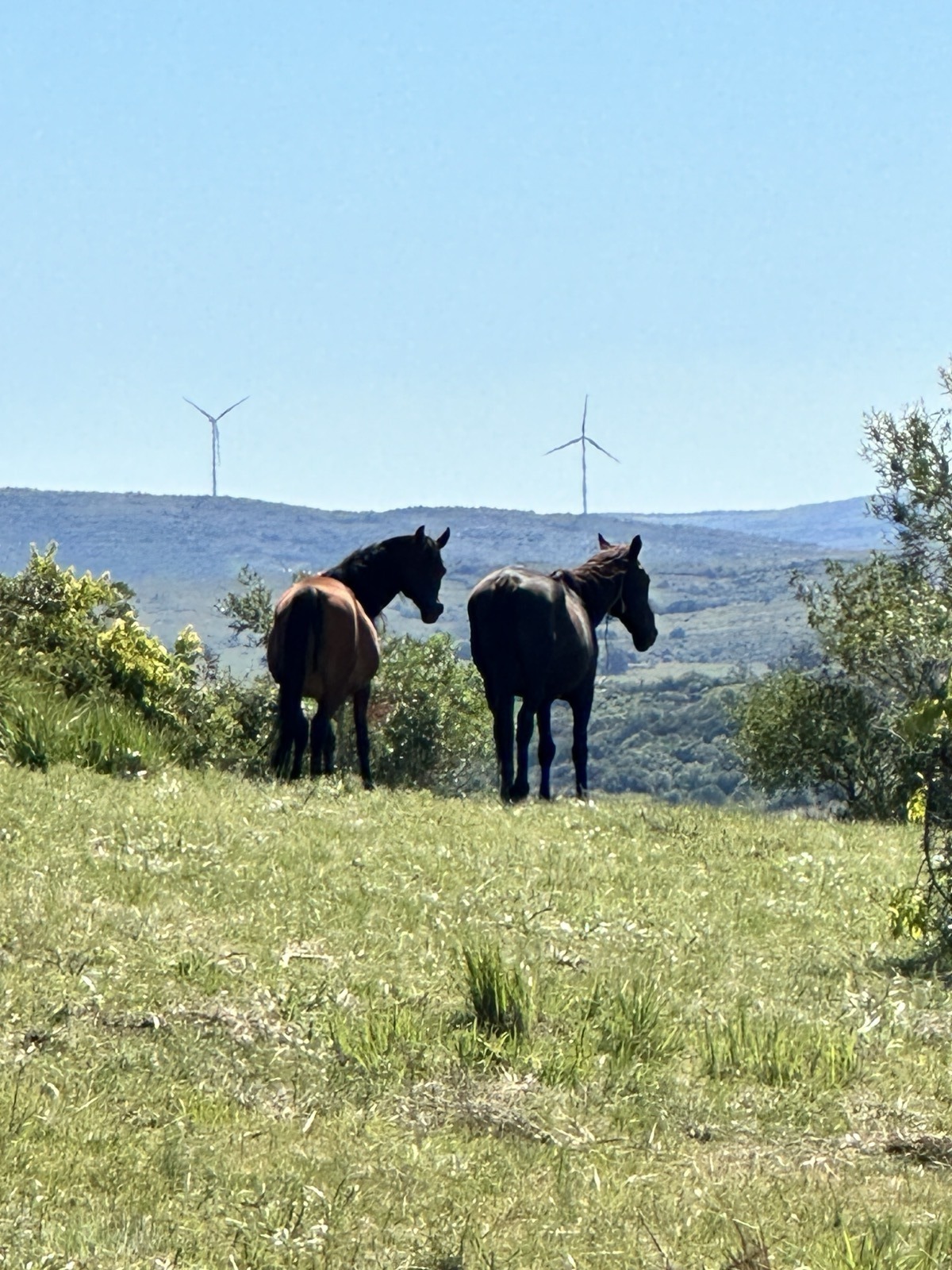
The oldest
estate in Uruguay
Basaltic soil, criollo horses, 57,000-litre foudres and a 19th-century winery. Roberto Cipresso discovered here a terroir astonishingly similar to that of Galicia — and we planted Albariño and Mencía to honour it in an Atlantic key.
Basalt, wind and memory
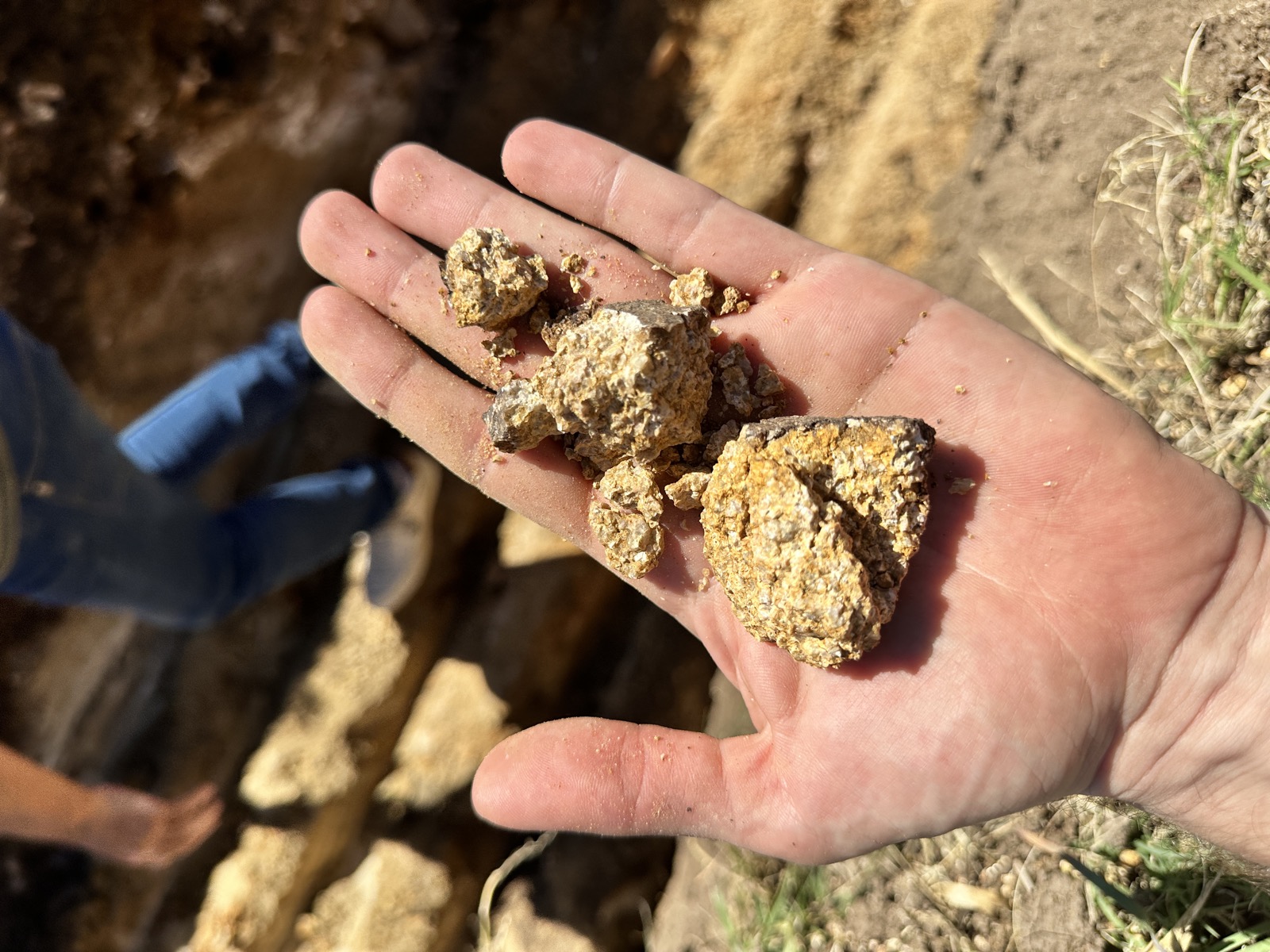
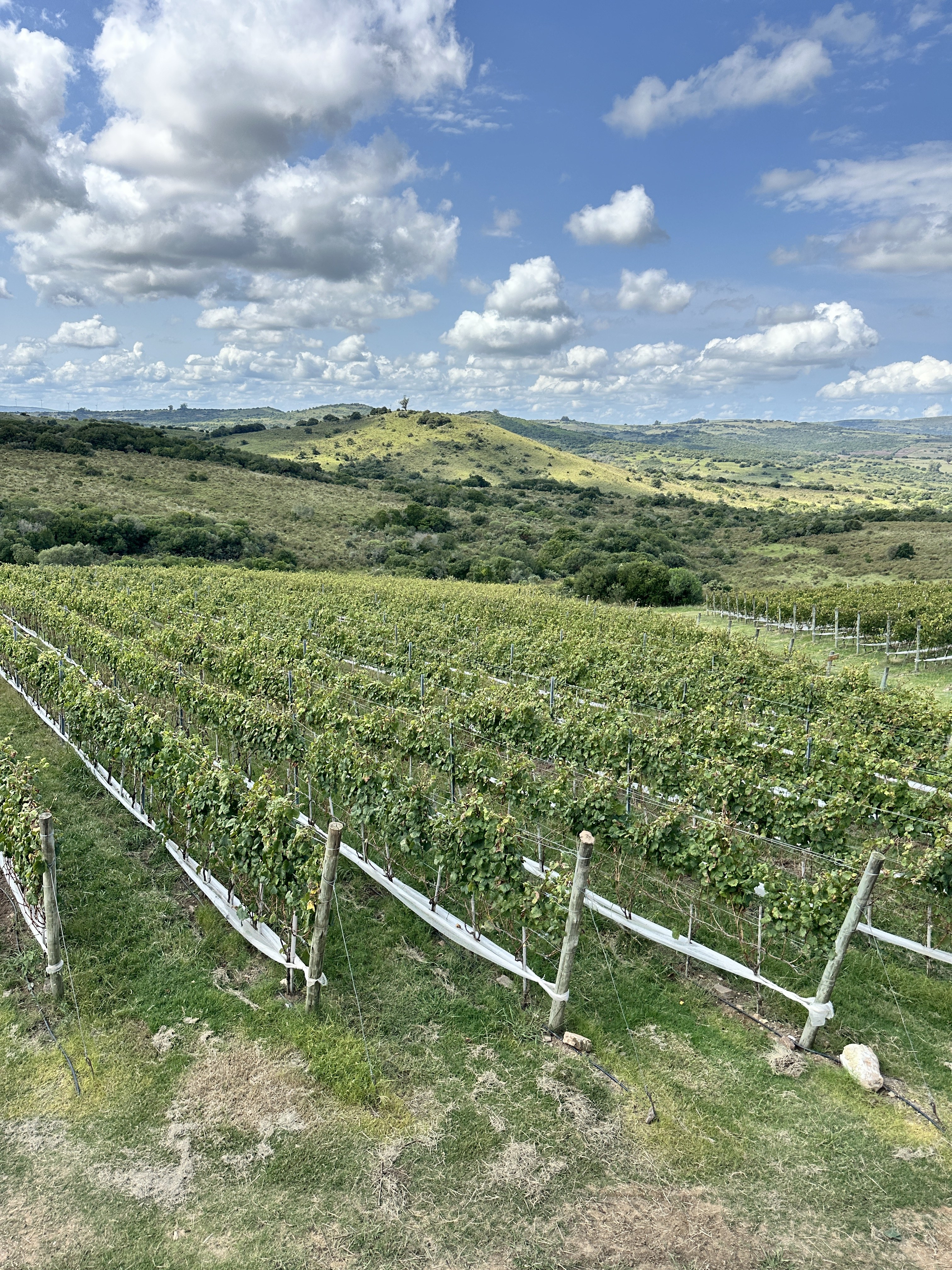
Chacras de las Cañas is one of the oldest winegrowing estates in Uruguay. Its vineyards grow on basaltic soil — volcanic rock that drains excessively and forces the root to dig metres deep in search of water, producing clusters of exceptional concentration.
The Uruguay River and the constant coastal winds modulate temperatures with a precision no winegrower could ever design. The result is wines of vivid acidity, intense colour and an earthy minerality that speaks directly of the basalt in which they were born.
Roberto Cipresso studied the soil inch by inch. The trenches revealed a geological profile —and an Atlantic regime— surprisingly similar to that of the Rías Baixas. That is why we decided to pay tribute to Galicia, planting Albariño as the main grape and Mencía as the secondary one, to build mineral whites, elegant rosés and sparkling wines with style.
Discover the membership plans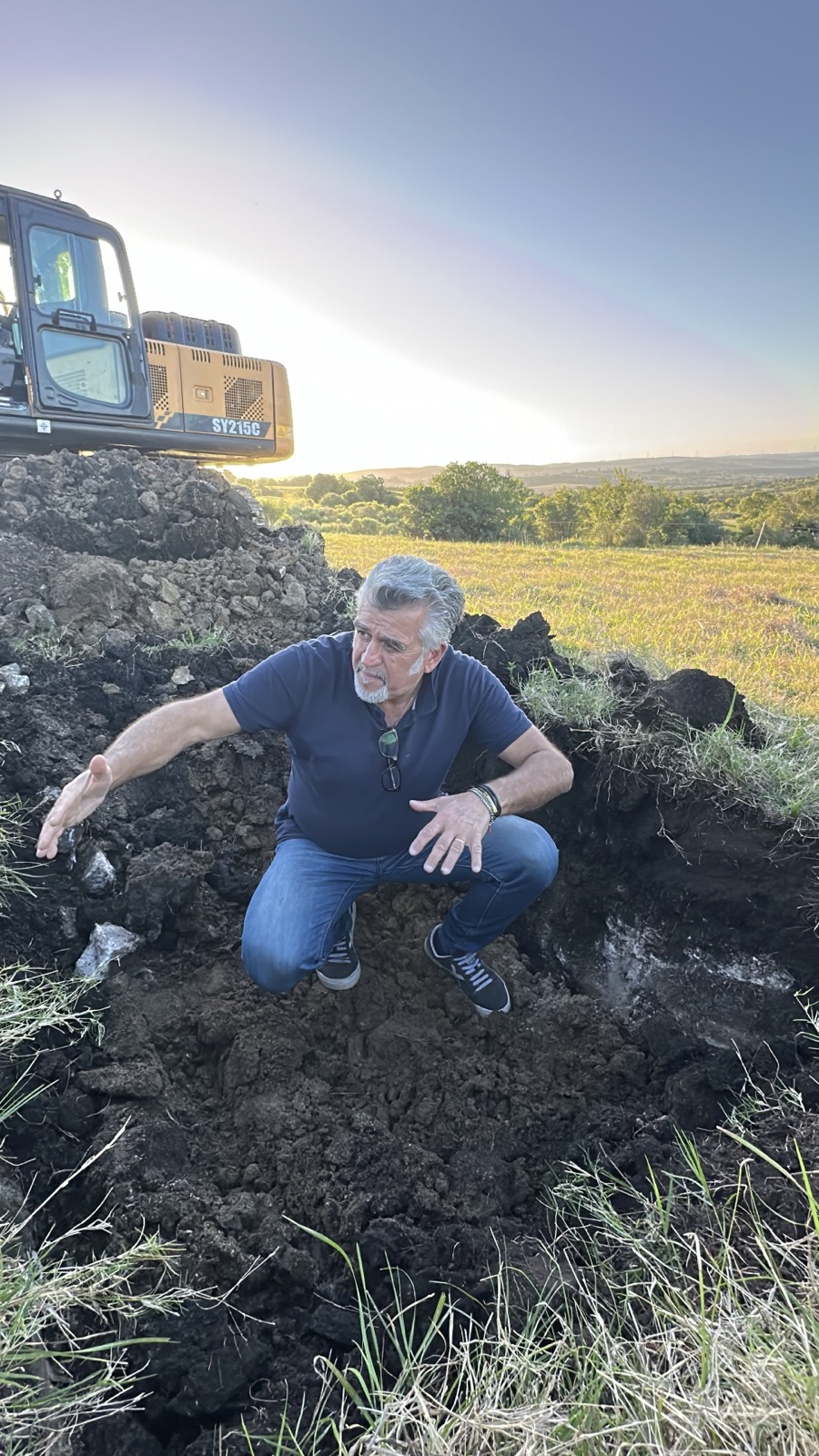
A terroir that recalls Galicia
The basaltic soil of Chacras de las Cañas is millions of years old. Its porous structure drains excess rainfall and generates a controlled water stress. Combined with the Atlantic climate of the Uruguay River —humid, windy, saline— it strikingly recalls the Galician terroir that produces the world's great Albariños.
That is why —Roberto Cipresso observed— it was natural to bring here the grapes that best translate this climate into the glass: Albariño as the protagonist, Mencía as the counterpoint. From their dialogue come mineral whites with saline tension, elegant rosés and sparkling wines in the Italian style.
19th-century foudres
The winery at Chacras de las Cañas houses 57,000-litre oak foudres — monumental ageing vessels in use since the 19th century. They are part of Uruguay's winemaking heritage and today they still work, weaving Roberto Cipresso's wine into their century-old wooden walls.
The winery's architecture is of bare stone, wooden ceilings and an interior temperature that stays stable without artificial climate control — the passive engineering of the 19th century at the service of 21st-century viticulture.
www.chacrasdelascanas.com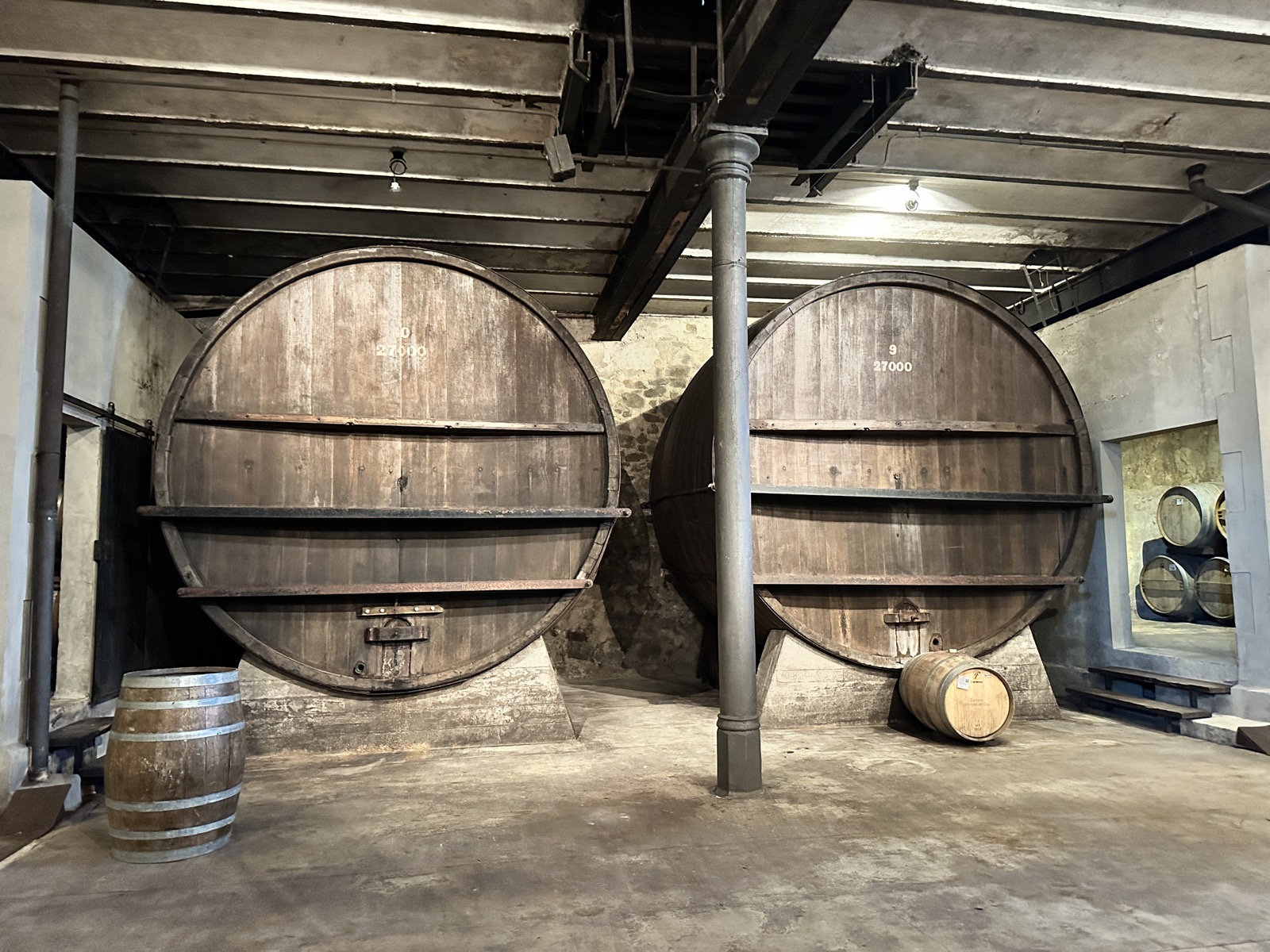
Albariño and Mencía · A tribute to Galicia
Two Galician grapes transplanted onto Uruguay's basalt to build Atlantic wines with Italian style: mineral whites, elegant rosés and sparkling wines with tension.
Albariño
Atlantic, mineral, saline. On the basalt of Chacras de las Cañas it produces whites of great tension and depth —citrus, white peach, orange blossom— with an iodised undertone that converses with the river wind.
It is the grape that builds the character of Oria Uruguay: the natural tribute to Galicia from the South American coast.
Mencía
A Galician red with an elegant perfume. It brings colour, fresh red fruit and a silky texture. Blended with Albariño it shapes rosés with style and bases for fine sparkling wines.
The counterpoint that sets these wines apart from any other made in the Southern Cone.
Boutique Hotel — 2 rooms
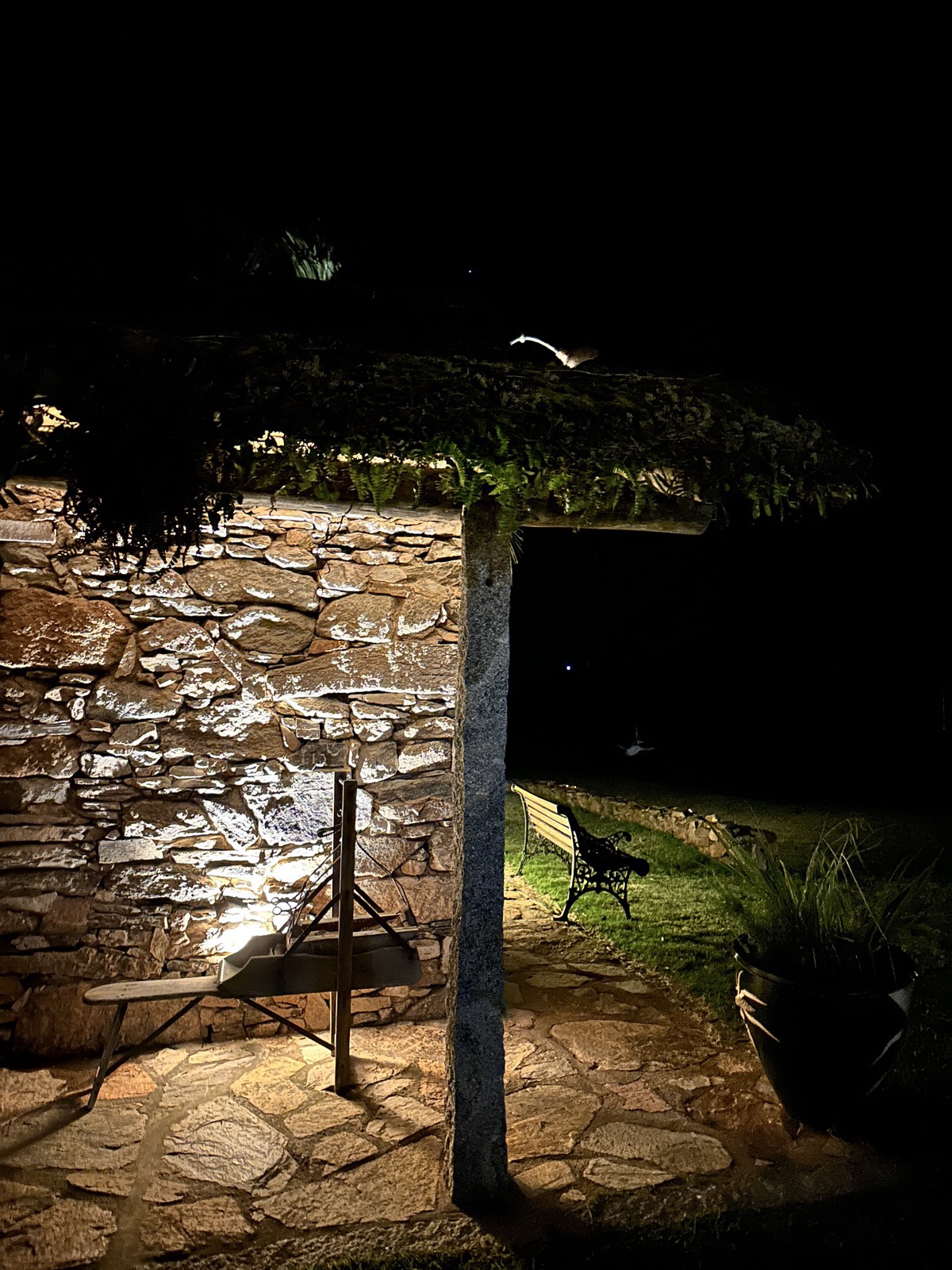
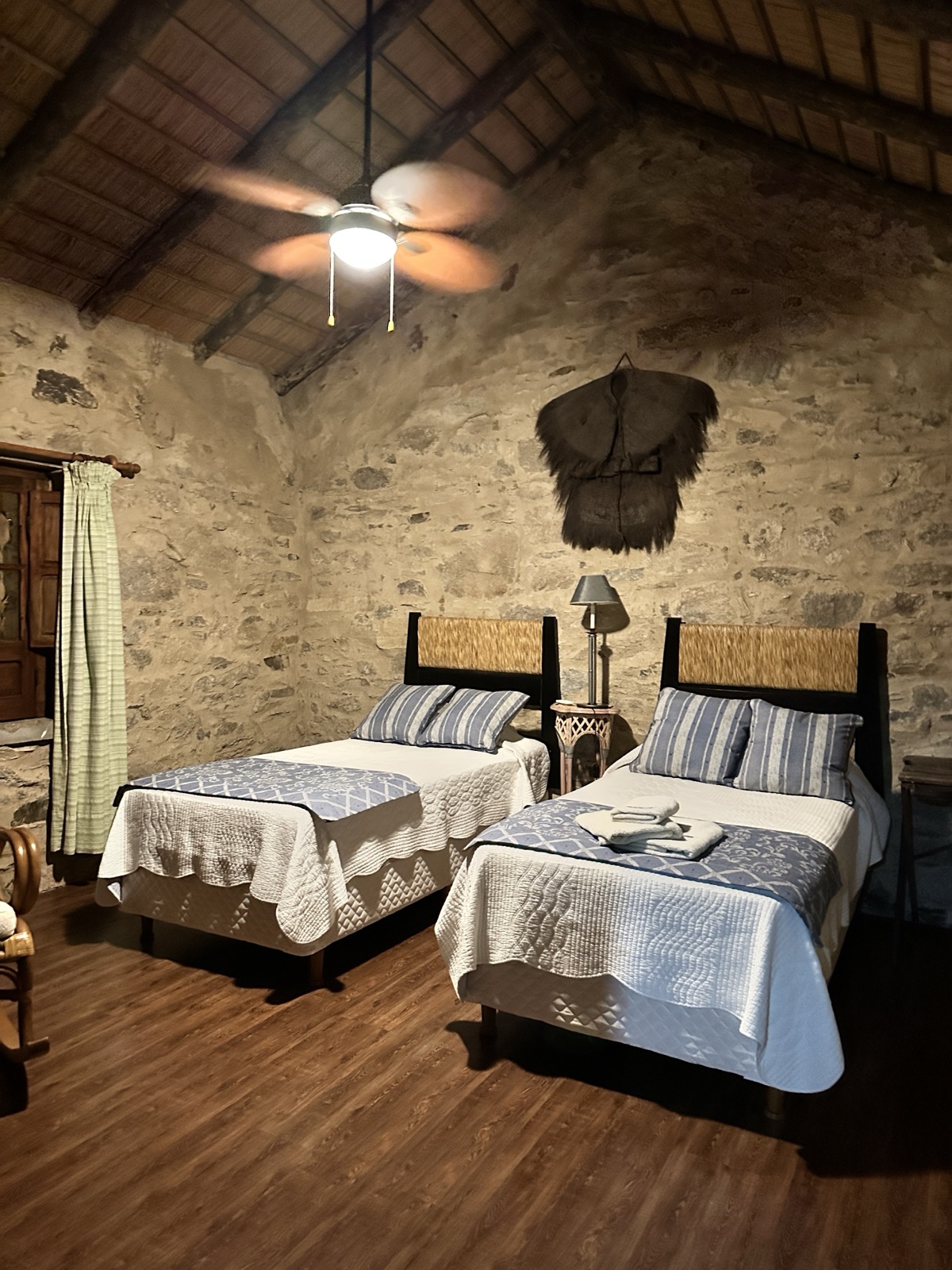
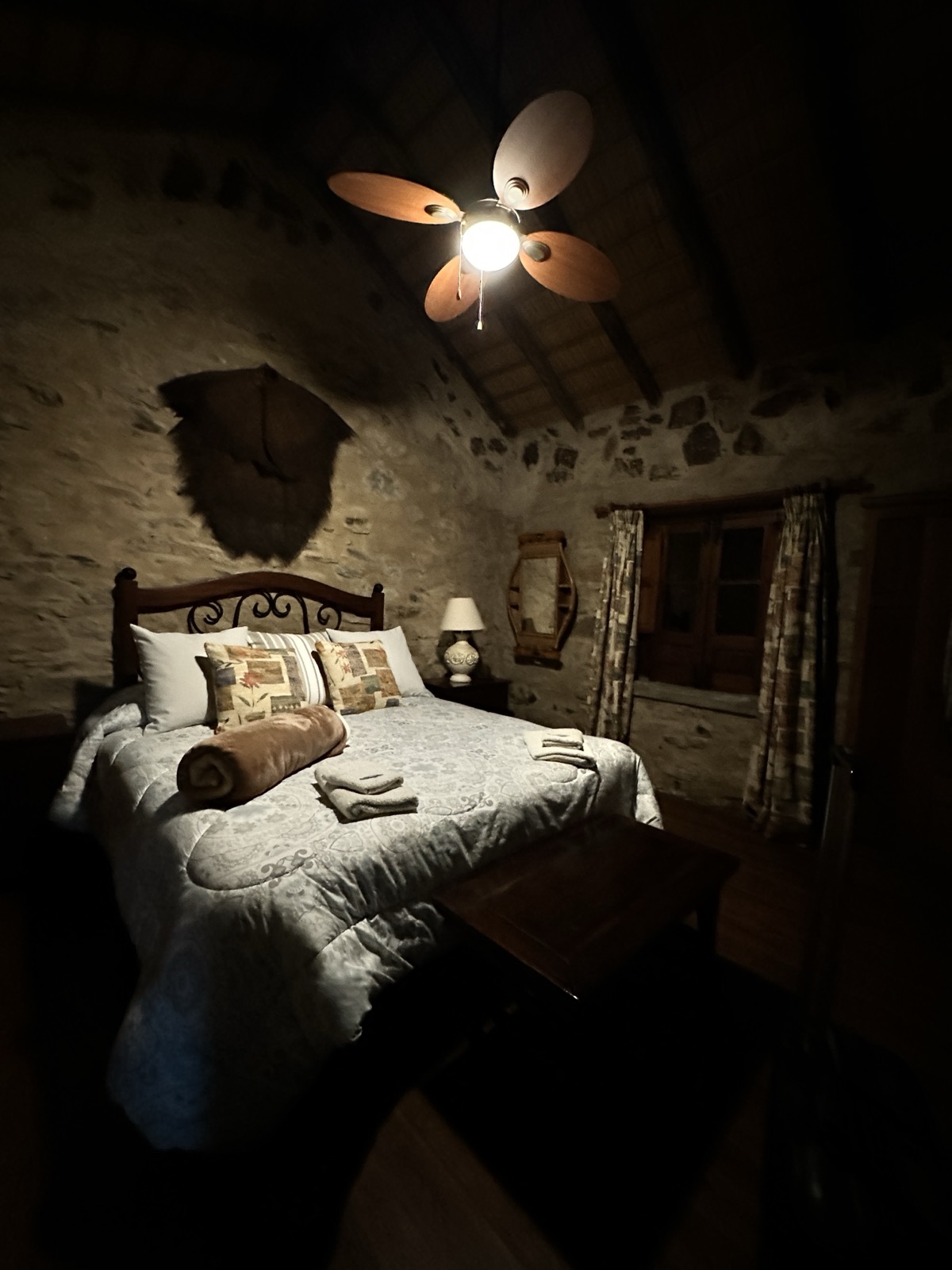
Inside the estate, in the historic stone quarters, there is a two-room boutique hotel. Bare stone walls, wooden ceilings, absolute silence and the vineyard just metres from the bed. The most exclusive lodging in the interior of Uruguay.
Reserve your land in Uruguay
Three ways to take part: a mosaico to receive your wine, a plot to build your house among the vines, or your own farm. From USD 7,500.
144 annual bottles of Albariño or Mencía. Company shareholding with the same features as Italy.
Discover MosaicoPlots to build your house surrounded by the vineyards of Chacras de las Cañas. The option to live winegrowing Uruguay.
Discover PlotYour own 4 to 5 hectare farm in Paysandú, with access to Roberto Cipresso's know-how and to the infrastructure of Chacras de las Cañas.
Discover Farm