GASTRONOMY · OCTOBER 2024
A Balsamico in Tuscany,
by the Hand of Andrea Severi
By Oria Toscana · October 3, 2024 · 9 min read
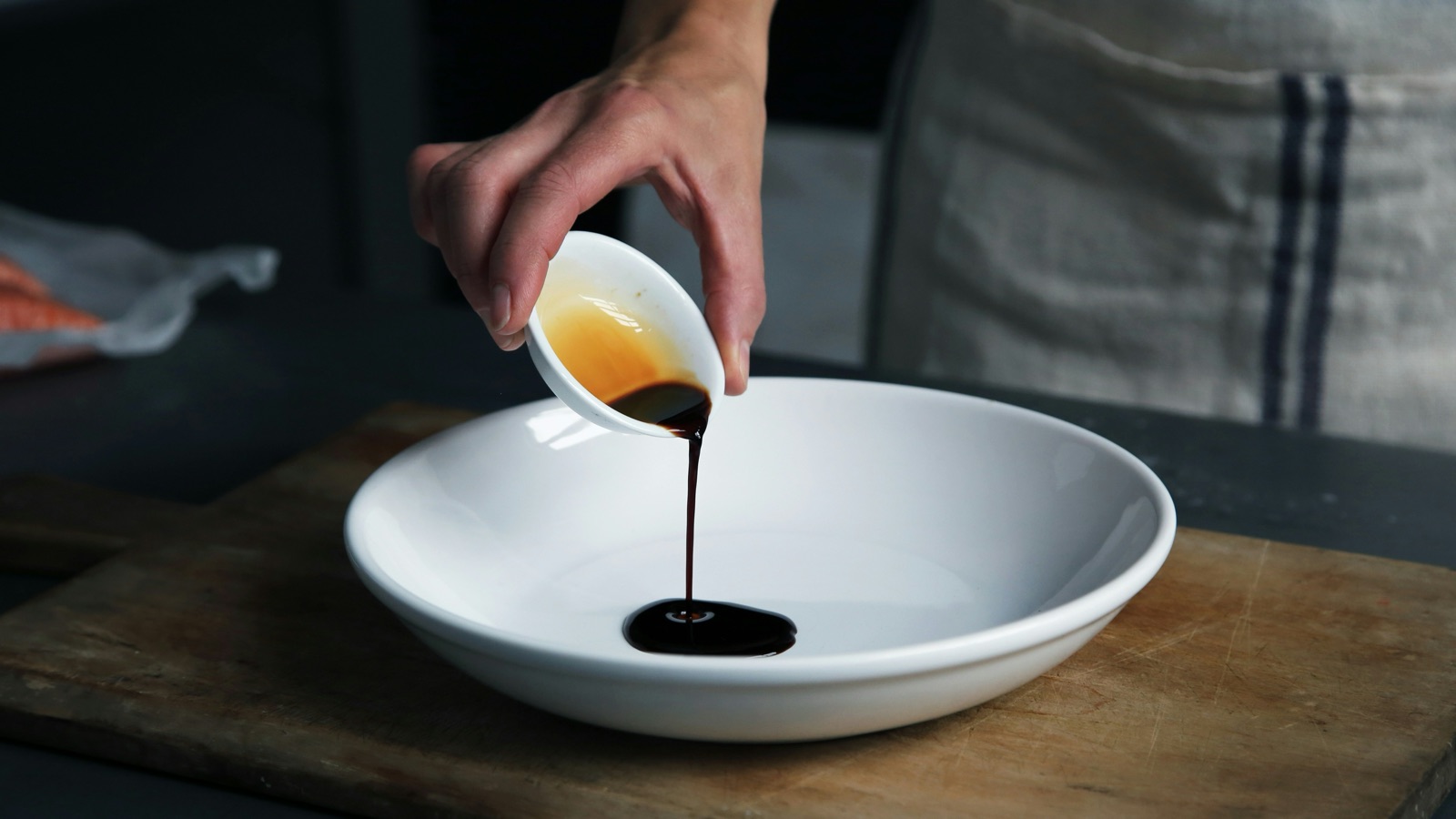
There are crafts in Italy that are passed on more through silent observation than through verbal teaching. That of the acetaio — master of aceto balsamico — is one of them.
Andrea Severi arrived at the estate on a Tuesday in October, with the hills still in the late green color before autumn. He is seventy-two years old, with the hands of a cabinetmaker and a way of moving through the attics that makes it evident he has spent more time among barrels than anywhere else in the world.
He is the third acetaio in his family in Arezzo. His grandfather began the batteria — the series of barrels in which the aceto ages — in 1921. Andrea inherited it, expanded it, and now advises other Tuscan estates that want to produce traditional aceto balsamico with the same rigor.
He came to inspect our batteria: a series of barrels started at the end of the Second World War, which we steward at Oria today and keep feeding with Trebbiano and Lambrusco must from our harvests.
The first inspection
Andrea entered the attic without saying anything for the first five minutes. He smelled the air — the atmosphere of the space where the barrels age is as important as their contents, because the temperature variations between winter and summer are part of the concentration process. Then he touched each barrel with the palm of his hand, from the largest to the smallest, as if checking a pulse.
Finally, he took the pipette — the glass pipette with which acetai extract samples without opening the barrels — and asked for silence.
The sample from the smallest barrel — the heart of the batteria, with decades of aging behind it — was dense, dark amber, and smelled of cooked fruit and wood with an underlying acidity of a depth that only time can give.
"Bene," he said. Just that. But coming from Andrea Severi, it was enough.
The conversation about time
After the inspection, we sat on the terrace with a glass of the previous year's Oria and Andrea spoke for two hours. Not about technique — about philosophy.
The modern world's problem with aceto balsamico, according to Andrea, is not counterfeiting — although there is that too. It is impatience. "Today everyone wants the result without the process. Balsamico teaches that there are results that only exist if you accept that you will not see them soon."
His own balsamico — the one we received in a small flask as a gift at the end of the afternoon — is a liquid his family began generations ago. Andrea bottles it with his grandfather's name on the label. Not his own.
"It is not I who made this aceto. Time made it. I was only the guardian."
The three woods that determine character
One of the things most debated in the world of aceto balsamico is the sequence of woods in the batteria. Each wood contributes different aromatic compounds to the liquid during the annual transfer process. Andrea has his preferences, built over fifty years of work.
The large barrel — the first to receive the cooked must — should always be oak, according to Andrea. Oak gives structure and the tannins the aceto needs in its first phase. The intermediate barrel — the second or third link — should be cherry, which contributes red fruit notes that balance the acidity. The final barrel — the smallest, where the aceto spends its last years before bottling — should be juniper, which gives the spiced, resinous character that identifies the great Tuscan acetos.
"Juniper is the soul of balsamico," said Andrea. "Without it, you have a good vinegar. With it, you have something that has no name in other languages."
"Aceto balsamico is the only food in the world that improves for decades after whoever began it is gone. It is a conversation between generations." — Andrea Severi, acetaio
What comes next at Oria
Our batteria is not young: it was started at the end of the Second World War and has by now completed around sixty rackings, one per year. Of the roughly thousand litres of must we cook each season, barely five litres of "black gold" remain at the end of their journey through the barrels. It is a tiny production, impossible to industrialize.
Oria's current members are the custodians of that process. When they receive it, they will know that part of the story of that flask is the October afternoon of 2024 on which Andrea Severi visited the attic, placed his palm on each barrel, and said "bene."
The aceto of Oria, reserved for our members
Only Oria members can acquire this aceto, aged for decades in the batteria.
See the membership plans